

Josefin Dolsten-Kuhel, Director of Content and PR
At Sinai, the Israelites didn't receive a meandering monologue. They received the essential thing: distilled, direct, unforgettable. Some commentaries suggest that the Israelites only heard the first aleph of the first word! But, in many ways, that was the essence of the message.
Revelation, at its core, is the act of finding what matters most and offering it to the world with clarity and purpose.
Most of us know what we care about and the issue our missions are meant to address. What's harder is translating that into something another person can actually receive.
That's where the messaging triangle comes in. It's a simple framework we use in media training at Tiny Windows, and it works equally well for a press interview, a pitch meeting, or an intro at a networking event. The triangle has three points:
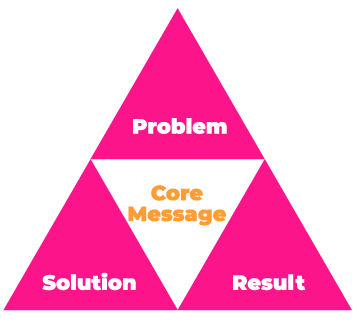
Problem. What's broken, missing, or misunderstood in the world that you've devoted yourself to addressing?
Solution. What’s needed to address this problem? What are you doing about it? The research, the program, the approach, the work?
Result. What does the world look like when your work succeeds?
Core message. That’s your ideal headline, the through-line you return to no matter what question you're asked.
And here’s the thing: the real challenge isn't just in knowing your answer to each of these. It's resisting the urge to say everything… when just the aleph is enough.
What would it look like to offer your work to the world with that kind of clarity? Not less than the truth, but the most essential version of it?
That's the work of the messaging triangle. And, perhaps, the work of Shavuot too.